How Course Creators Can Build a Secure, Scalable Platform Without Tech Skills
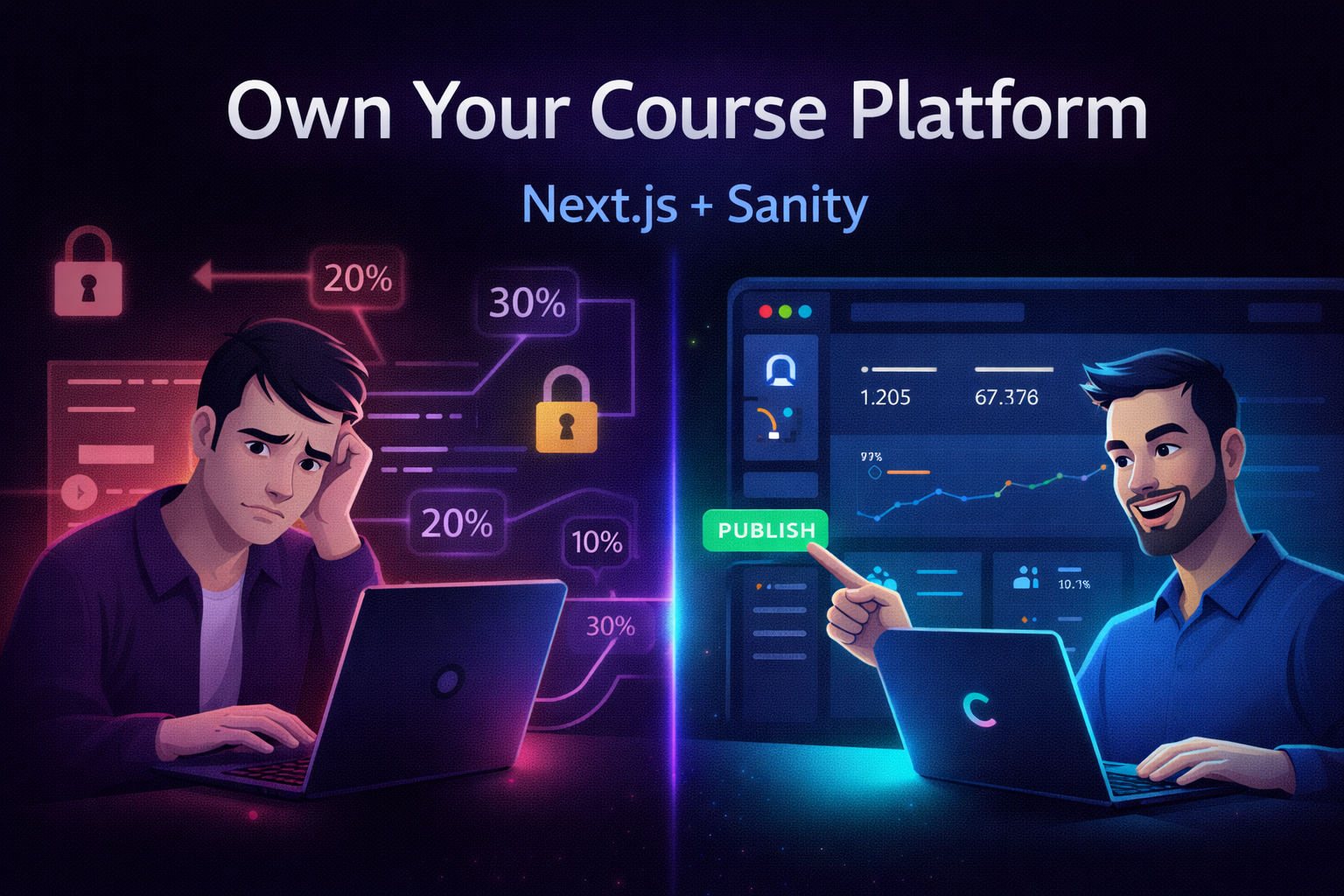
Most course creators run into the same bottleneck.
You create a valuable course.
You build an audience.
You start selling.
Then the platform becomes the problem.
- marketplace commissions reduce margins
- off-the-shelf tools limit control
- developer bottlenecks slow every update
If you want a platform that is fast, secure, easy to manage, and built for scale, a custom headless setup can solve that without making content operations harder.
The Real Problem Course Creators Face
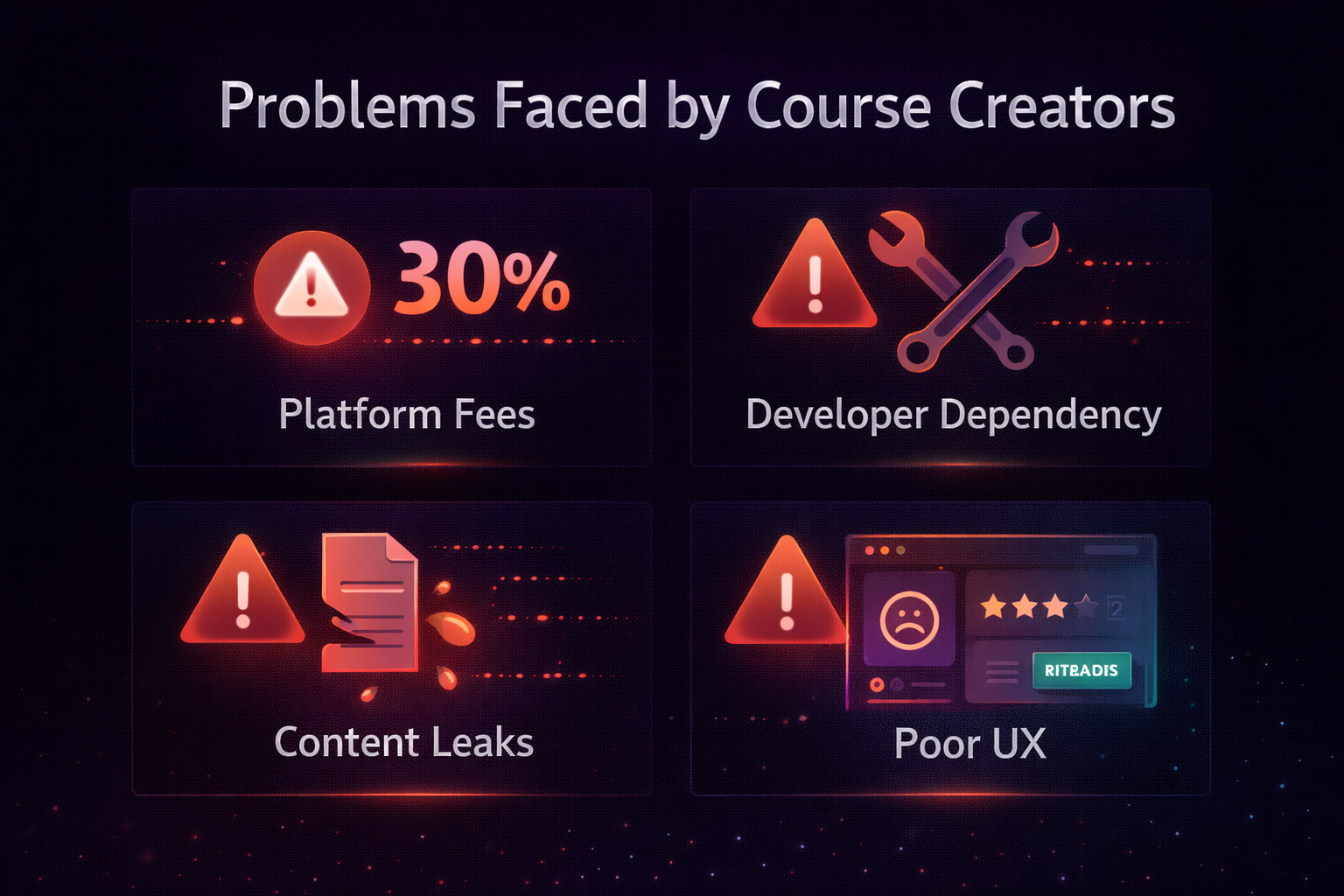
Most creators do not simply need a website.
They need:
- secure content delivery
- easy content management
- a scalable system
- strong conversion-focused UX
But what they usually get is this:
| Problem | Result |
|---|---|
| Platform dependency | No real control over product or pricing |
| Developer dependency | Slow updates and costly iteration |
| Security issues | Risk of content leaks |
| Poor UX | Lower conversions and retention |
The issue is not only technology. It is ownership.
What Course Creators Actually Want
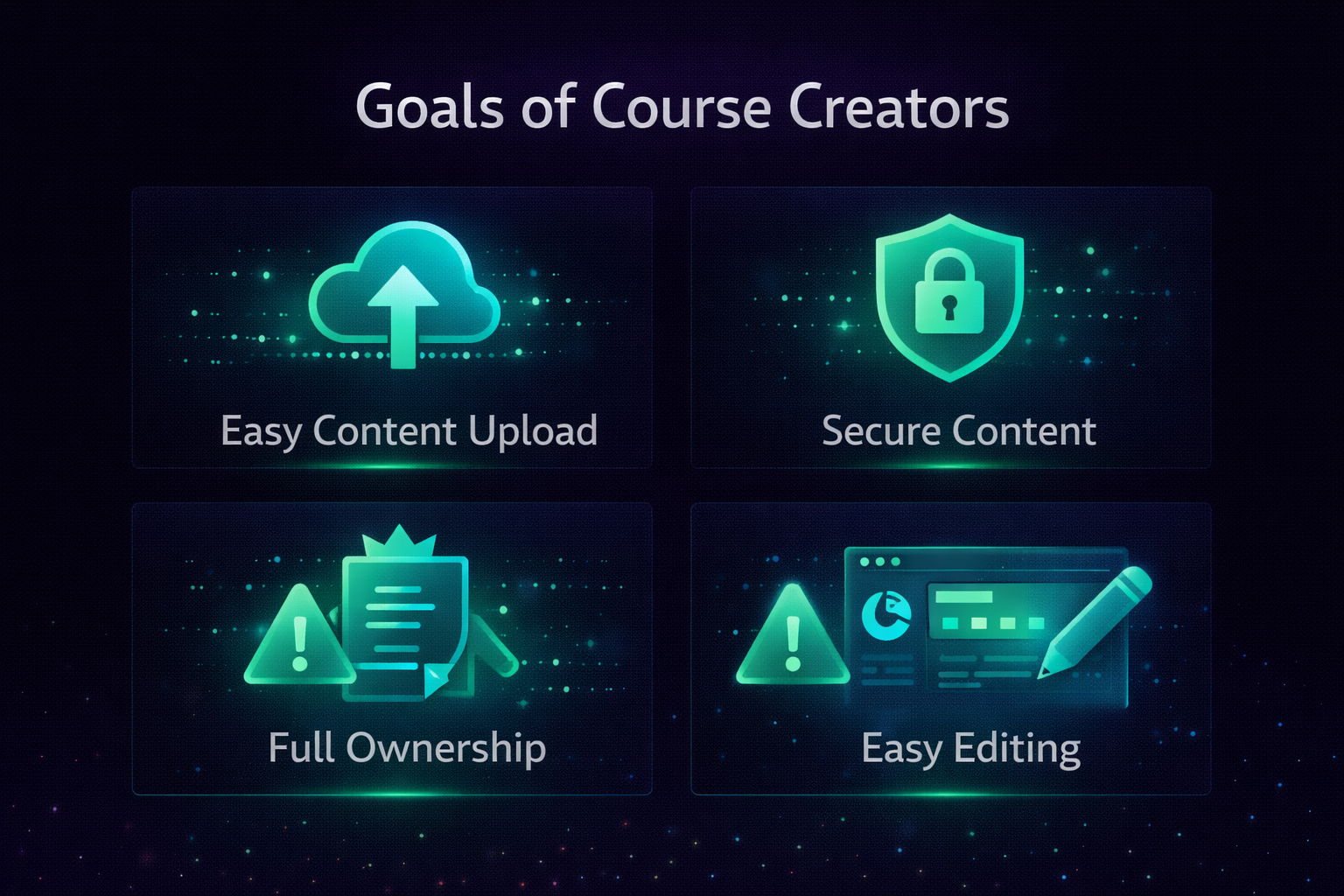
A modern course creator usually wants to:
- upload courses easily
- edit lessons any time
- protect paid content
- manage landing pages without waiting on developers
- own the entire platform experience
That means having a system that is simple enough for daily use and strong enough for long-term growth.
The Solution: A Headless Course Platform
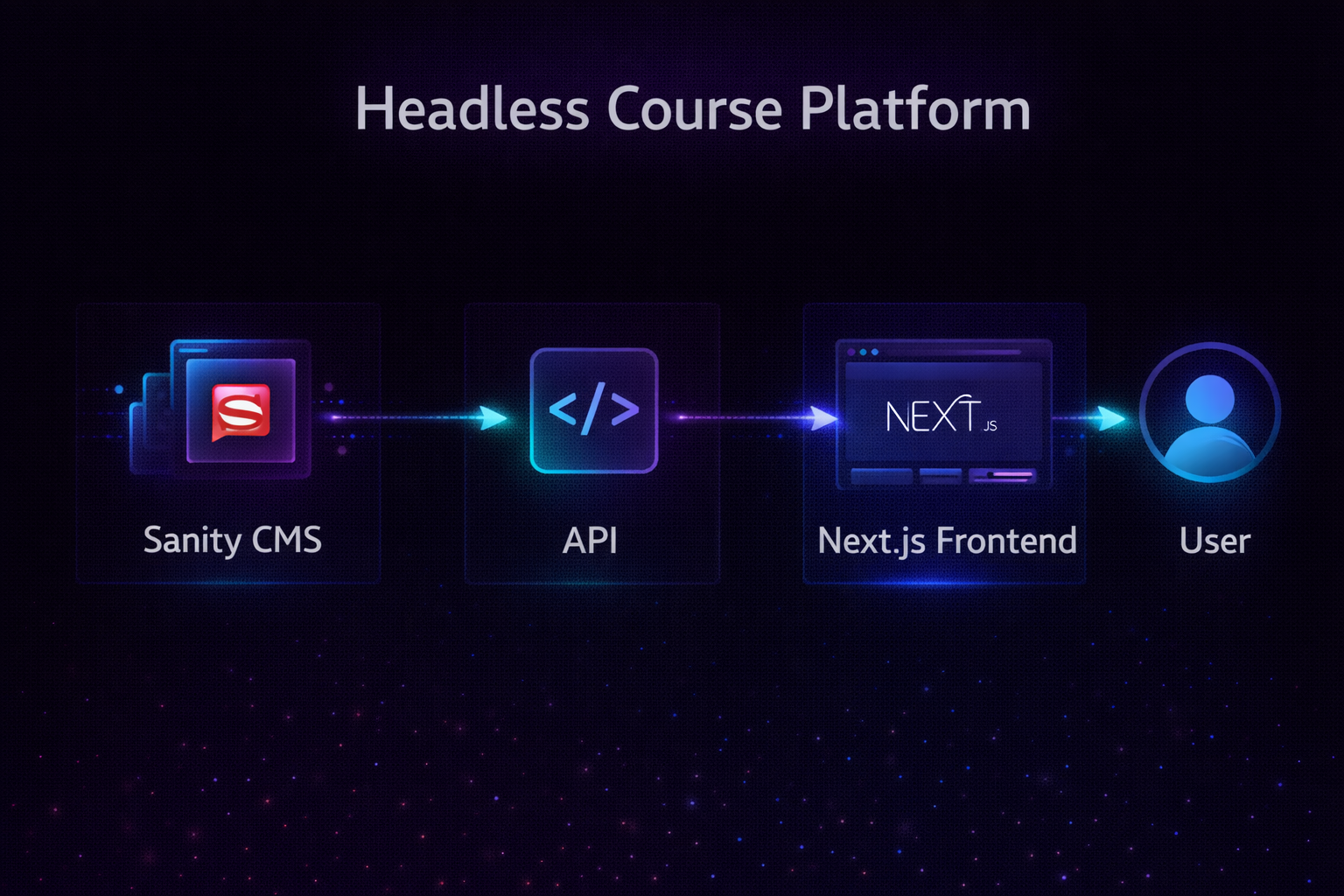
A practical way to solve this is:
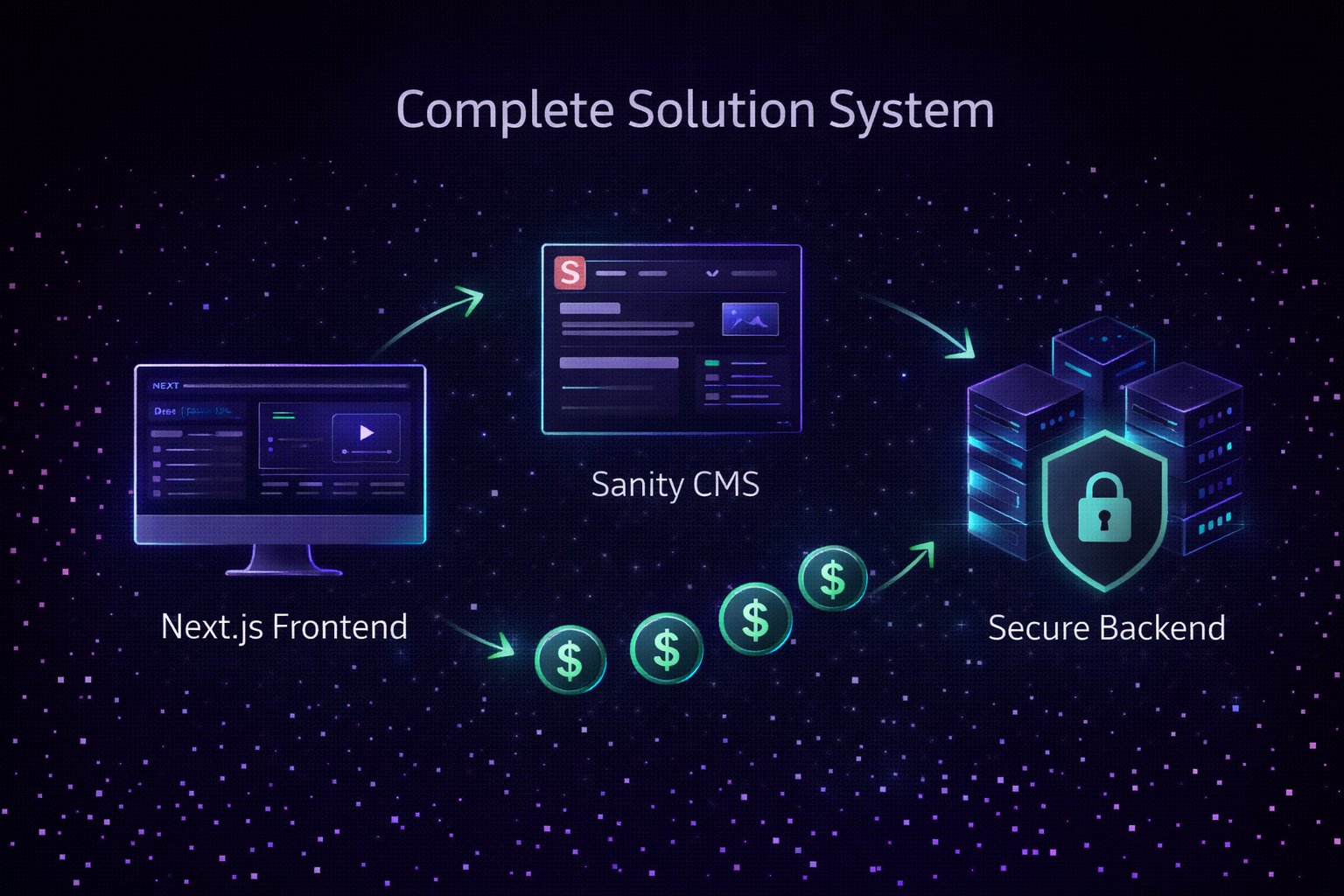
- Next.js for the frontend
- Sanity CMS for course and marketing content
This setup gives you:
- fast frontend performance
- secure and structured content delivery
- a much easier editing experience
- flexibility to scale features over time
Instead of forcing your business into a rigid course platform, the platform is designed around your business.
How This System Works
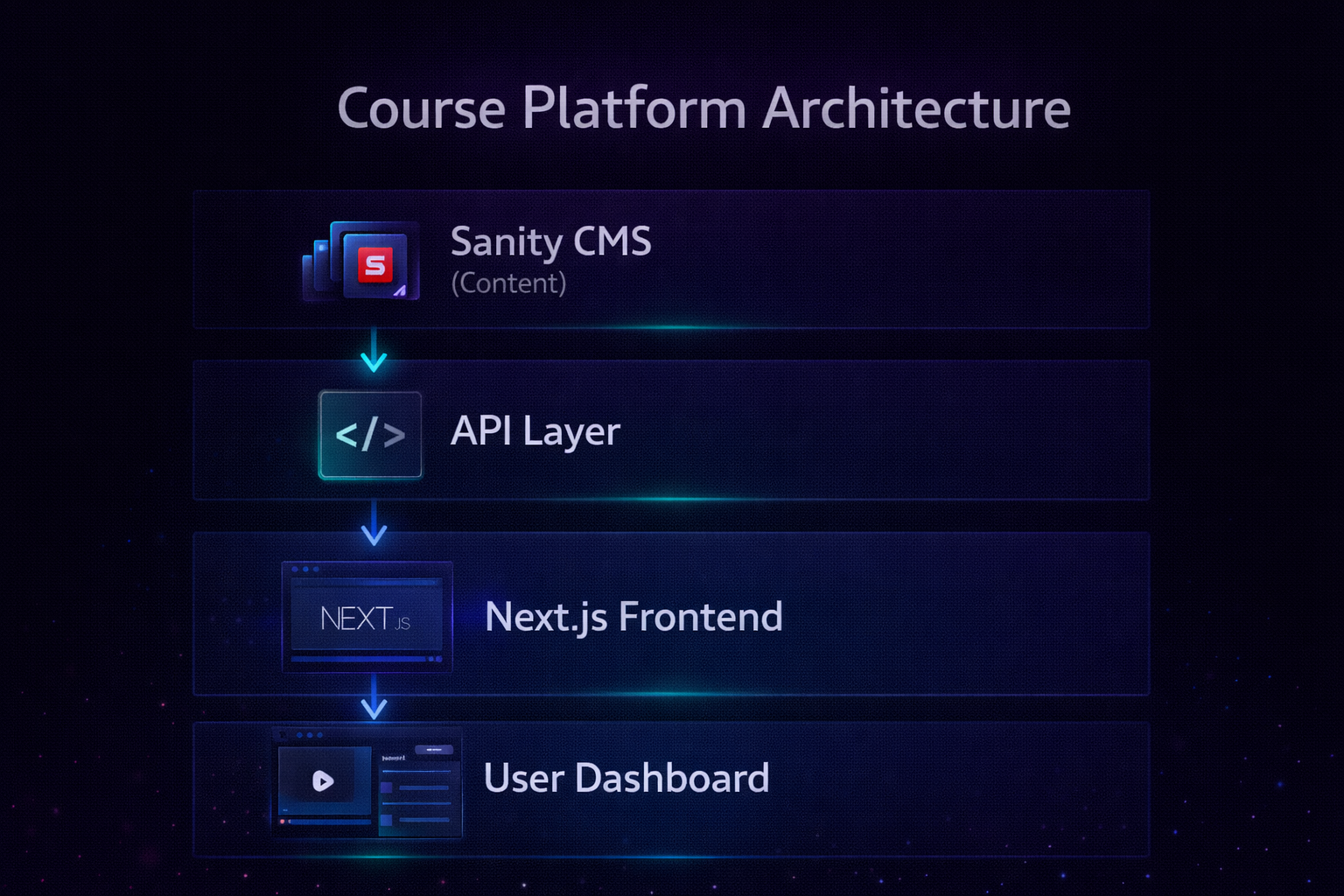
| Layer | Purpose |
|---|---|
| Sanity CMS | Store and manage course content |
| API | Deliver structured content securely |
| Next.js | Render the course platform UI |
Typical flow:
Upload -> Manage -> Fetch -> Display
This keeps content operations separated from frontend performance, which is one of the main advantages of a headless architecture.
Why This Is Practical for Non-Technical Creators
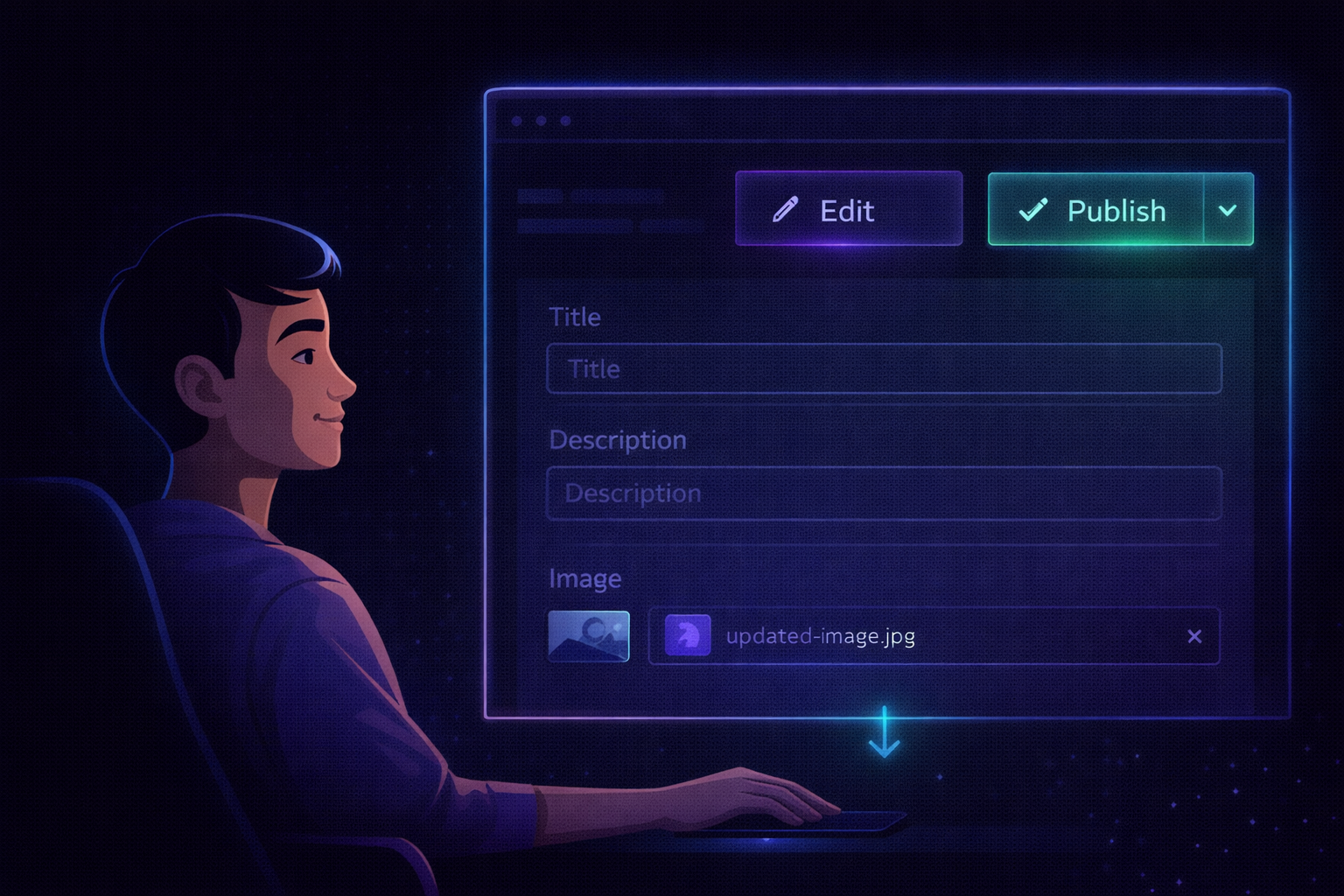
Easy Content Management
With a well-structured Sanity setup, creators can:
- add lessons
- edit modules
- update course descriptions
- change pricing content
- publish marketing updates
No code changes are needed for everyday content management.
Secure Content Delivery
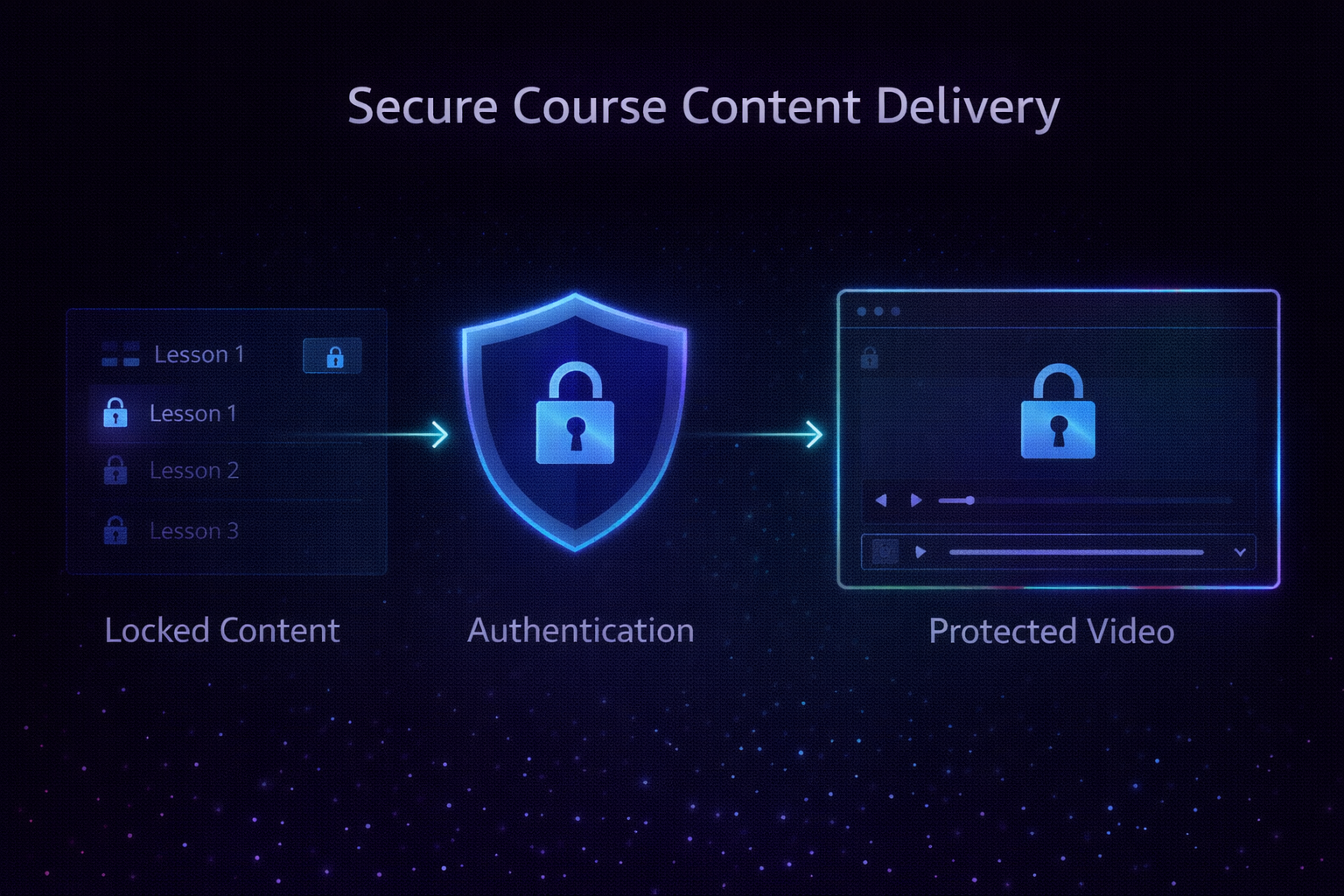
Premium course access can be protected using authentication and gated delivery logic.
That means your content can be:
- access-controlled
- protected for paid users
- delivered more safely than simple open-page publishing
Fully Custom Website Experience
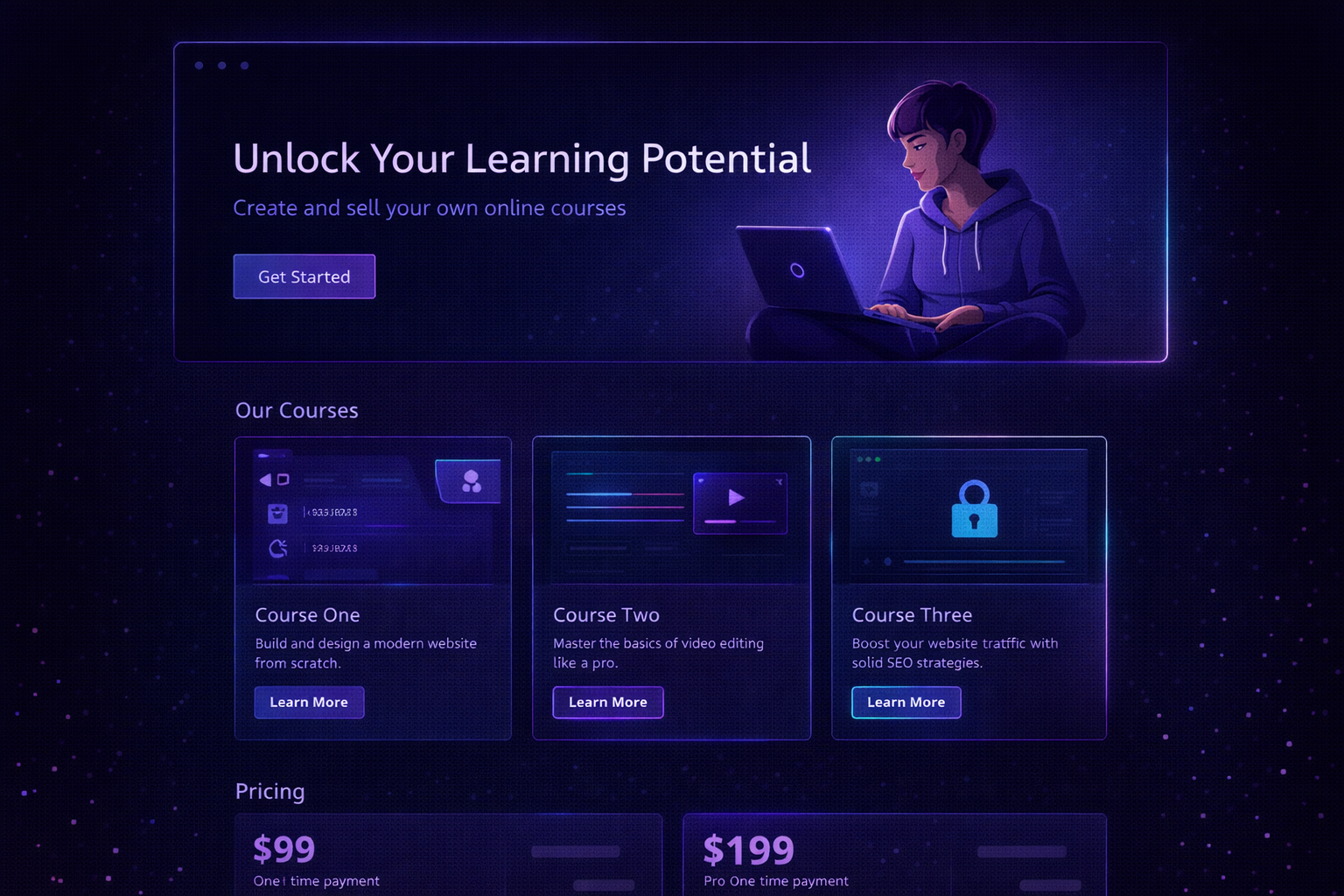
Unlike template-heavy course platforms, a custom frontend gives you:
- full branding control
- better lesson UX
- stronger sales pages
- a platform experience that matches your offer
That usually means better conversion potential and better long-term product positioning.
Real Use Cases
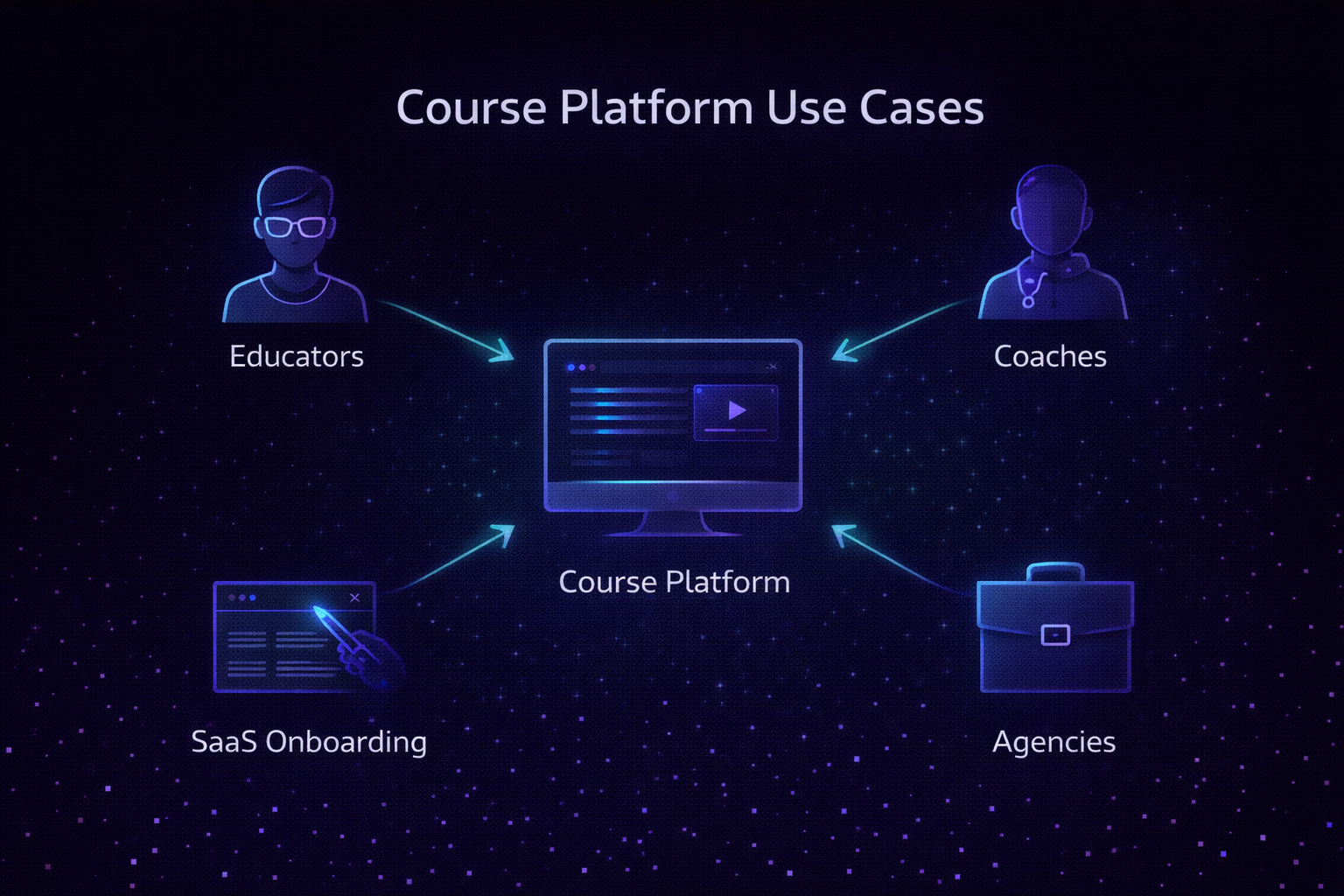
This type of setup works well for:
- educators
- coaches
- digital academies
- SaaS onboarding systems
- agency training programs
Any business selling structured knowledge can benefit from a system like this.
Comparison: Platform vs Headless Setup
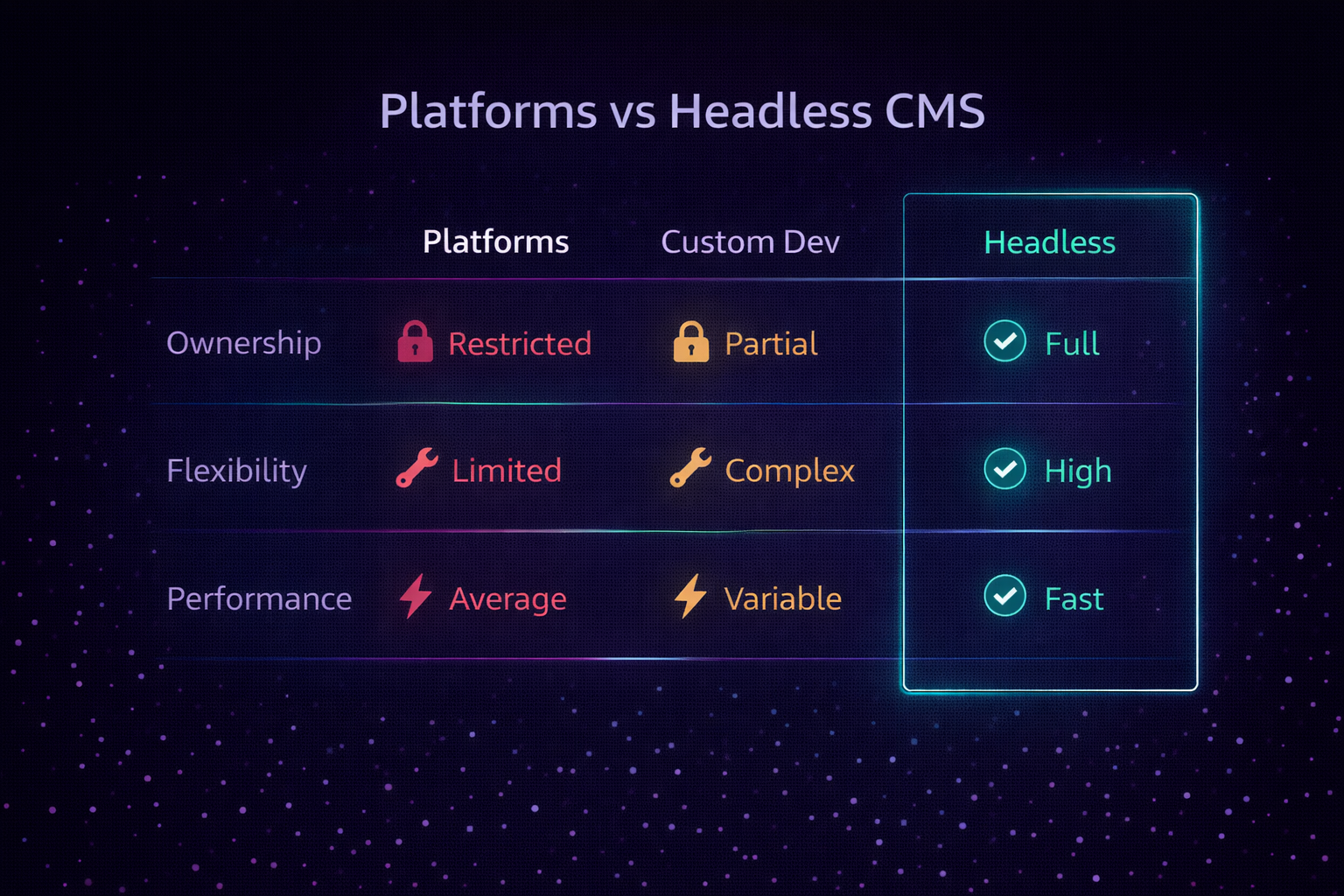
| Feature | Platforms | Custom Dev | Headless |
|---|---|---|---|
| Ownership | Low | High | High |
| Flexibility | Low | High | Very High |
| Ease of content management | High | Low | High |
| Performance | Medium | Medium | High |
A headless setup gives creators the ownership of custom development without making daily content changes difficult.
Why This Model Is Growing Fast
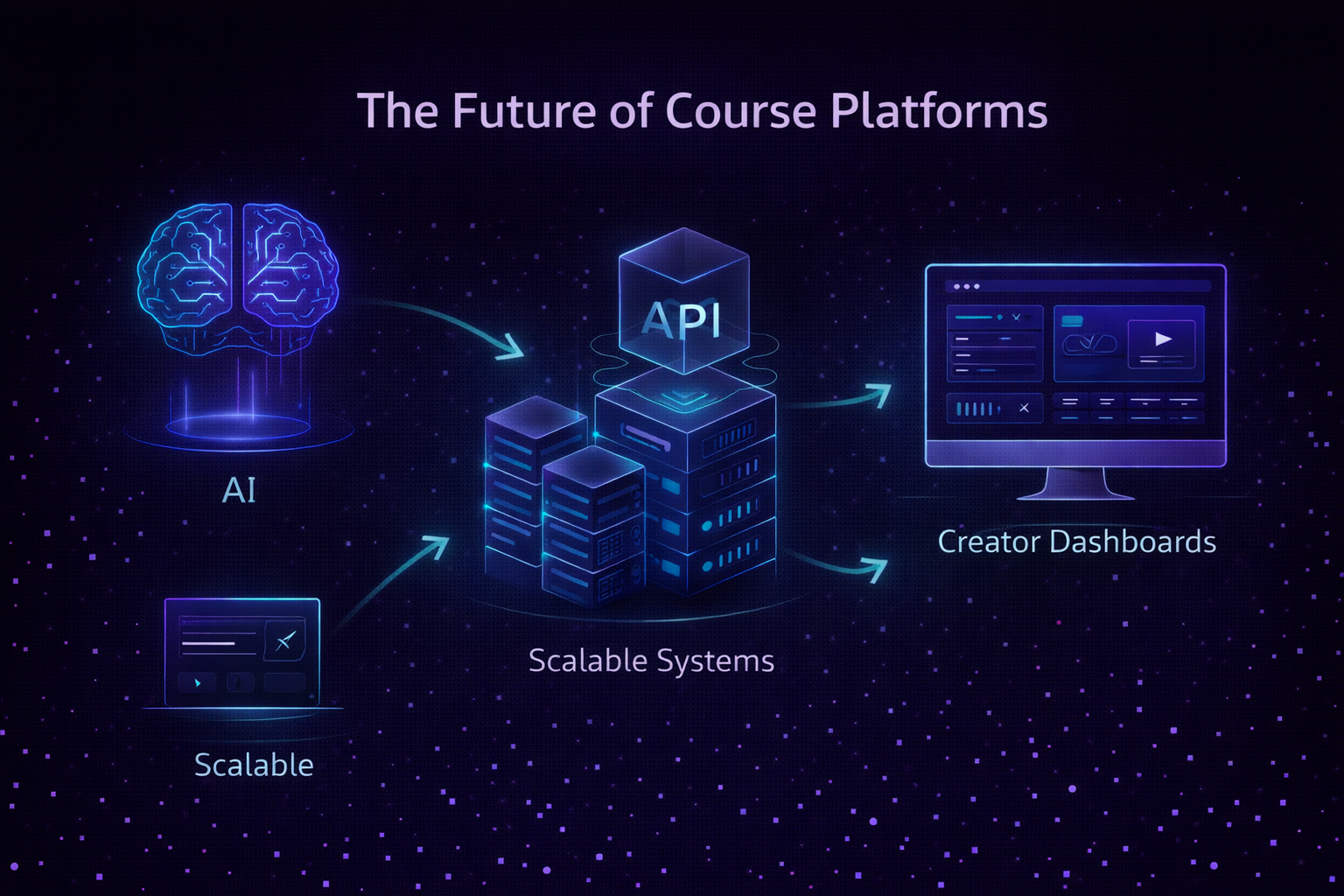
Creators increasingly want:
- ownership
- performance
- lower platform dependency
- better customization
Headless architecture solves those needs better than many generic course tools.
This is especially relevant for creators building premium brands rather than just uploading content to a marketplace.
The Business Opportunity
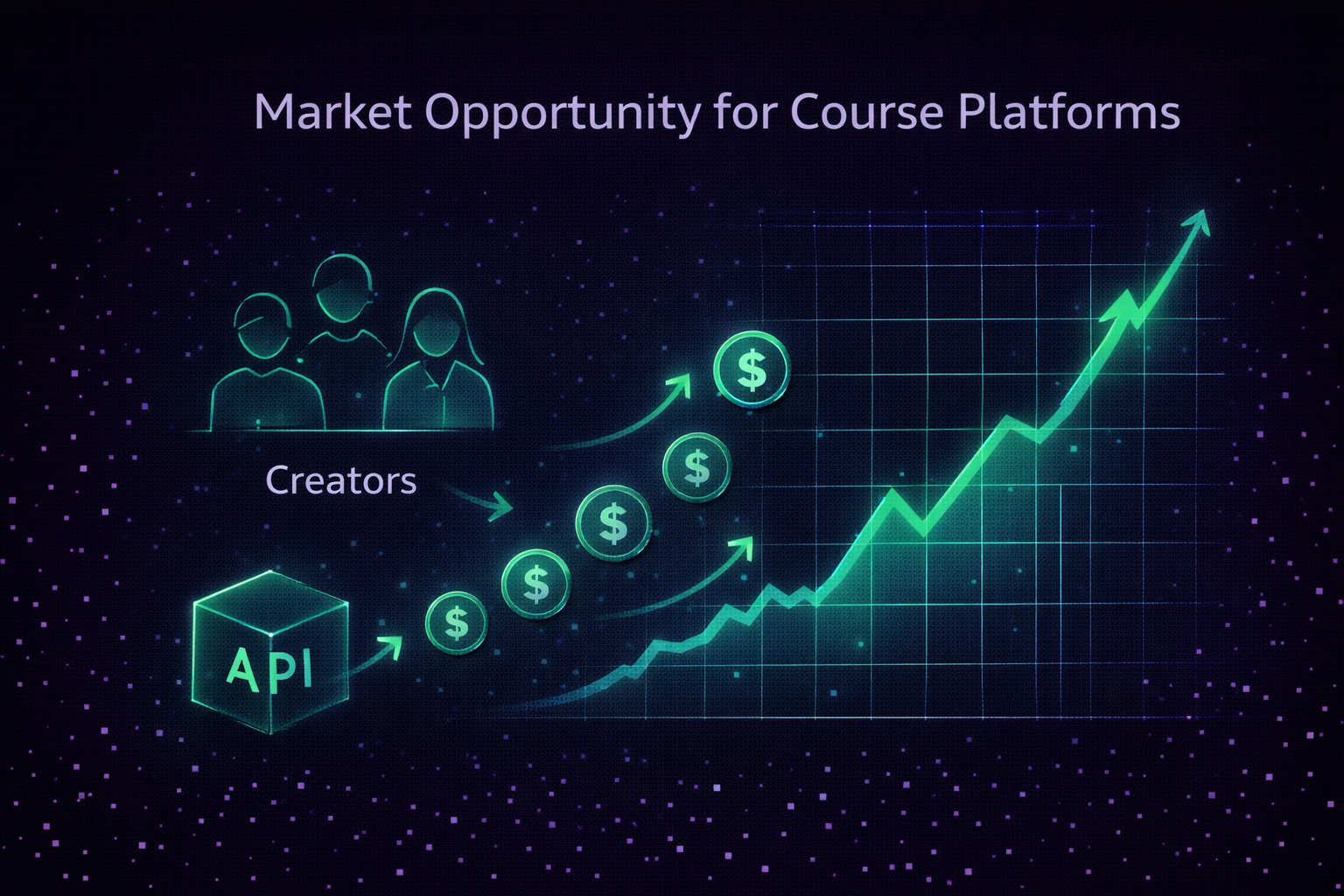
There is clear demand from creators who:
- are frustrated with platform limitations
- want more control over branding and UX
- are willing to invest in a better system
That makes custom course platforms a strong niche, especially for premium creators and businesses building educational products.
Our Approach
This is not just a website build.
The goal is to create a complete course platform that includes:
- CMS setup
- frontend implementation
- secure content delivery
- content structure planning
- room for future scale
The value is in making the platform easy for non-technical teams while keeping the engineering strong underneath.
Conclusion
The strongest long-term position for many course creators is to own the platform experience rather than depend entirely on a third-party tool.
If your priorities are:
- control
- scalability
- better UX
- lower dependency on closed platforms
then a Next.js + Sanity course platform is one of the best ways to build for long-term growth.
Related pages: